Most programs don't fail at the finish line.
They fail at the handoffs.

Design, engineering, software, manufacturing, suppliers. The work rarely breaks inside a function. It breaks in the space between them.
This guide shows leaders how to manage those interfaces before they turn into rework, delays, and cost overruns.
Ask any program leader where their last launch went sideways, and the story is almost always the same. A decision made in one discipline that nobody else saw coming. An issue that sat on a list for two weeks while everyone assumed someone else owned it. A milestone marked "complete" that wasn't actually ready.
These are not people problems. They're visibility problems. When teams work concurrently without a shared, transparent way to manage their dependencies, drama fills the gap.
The Obeya Management System draws on real transformations at TechnipFMC, Caterpillar, Schilling Robotics, and others to show how high-performing teams make the work visible and solve problems on cadence, instead of discovering them too late to matter.
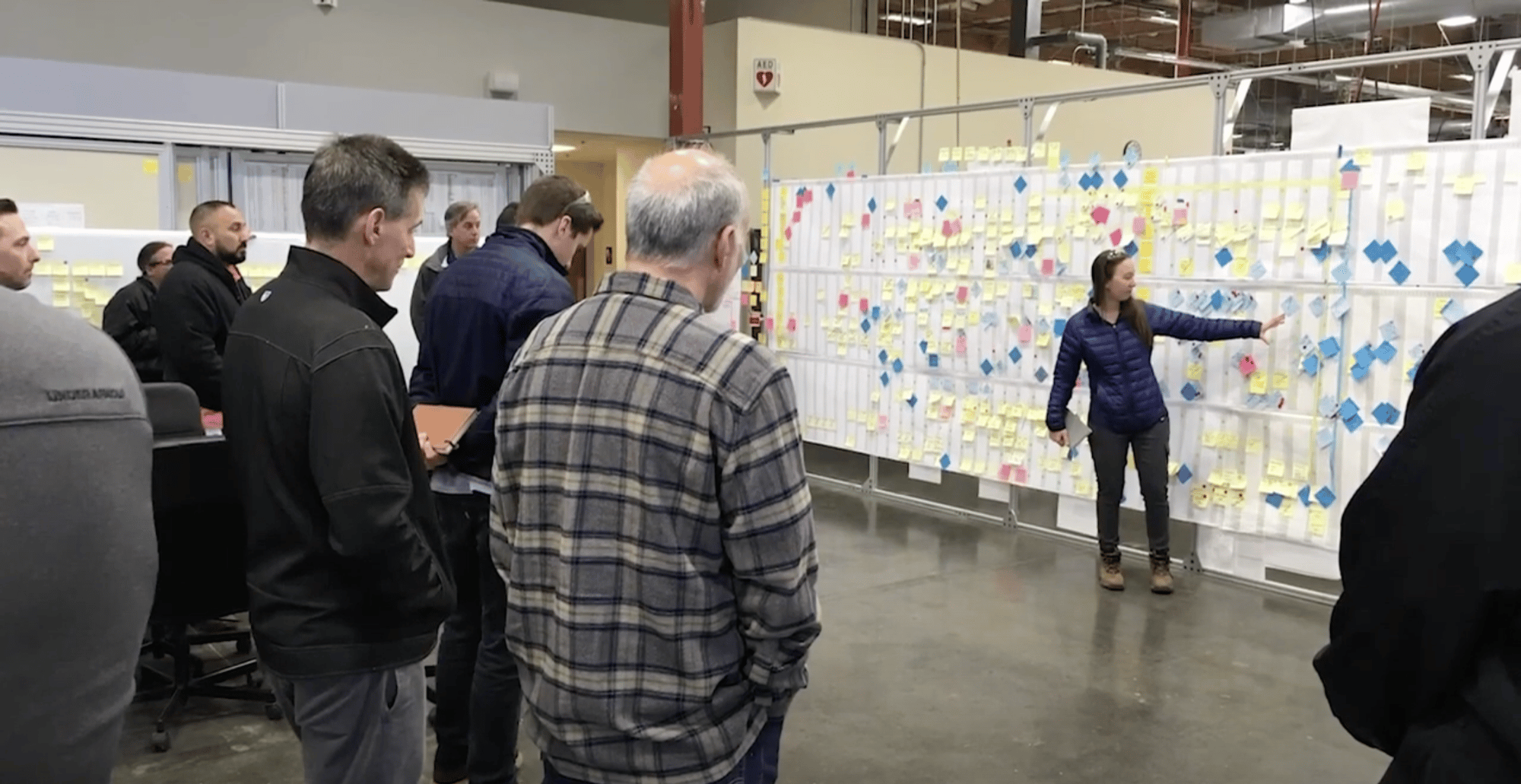
What's inside:
- Ten practical lessons for running an obeya as a management system, not a room full of sticky notes
- How one team cut a stubborn design issue from two weeks to two days
- Why "it's okay to be red, but not okay to stay red" changes how teams surface problems
- How TechnipFMC scaled obeya from a single product program to a global enterprise transformation
- The six LPPD guiding principles that hold it all together
Who it's for: Any leader responsible for getting complex, cross-functional work across the line. Product and process development is where obeya was born, but the thinking travels to operations, healthcare, and beyond.
© Copyright 2000-2026 Lean Enterprise Institute, Inc. All rights reserved.
Lean Enterprise Institute, the leaper image, and stick figure are registered trademarks of Lean Enterprise Institute, Inc.